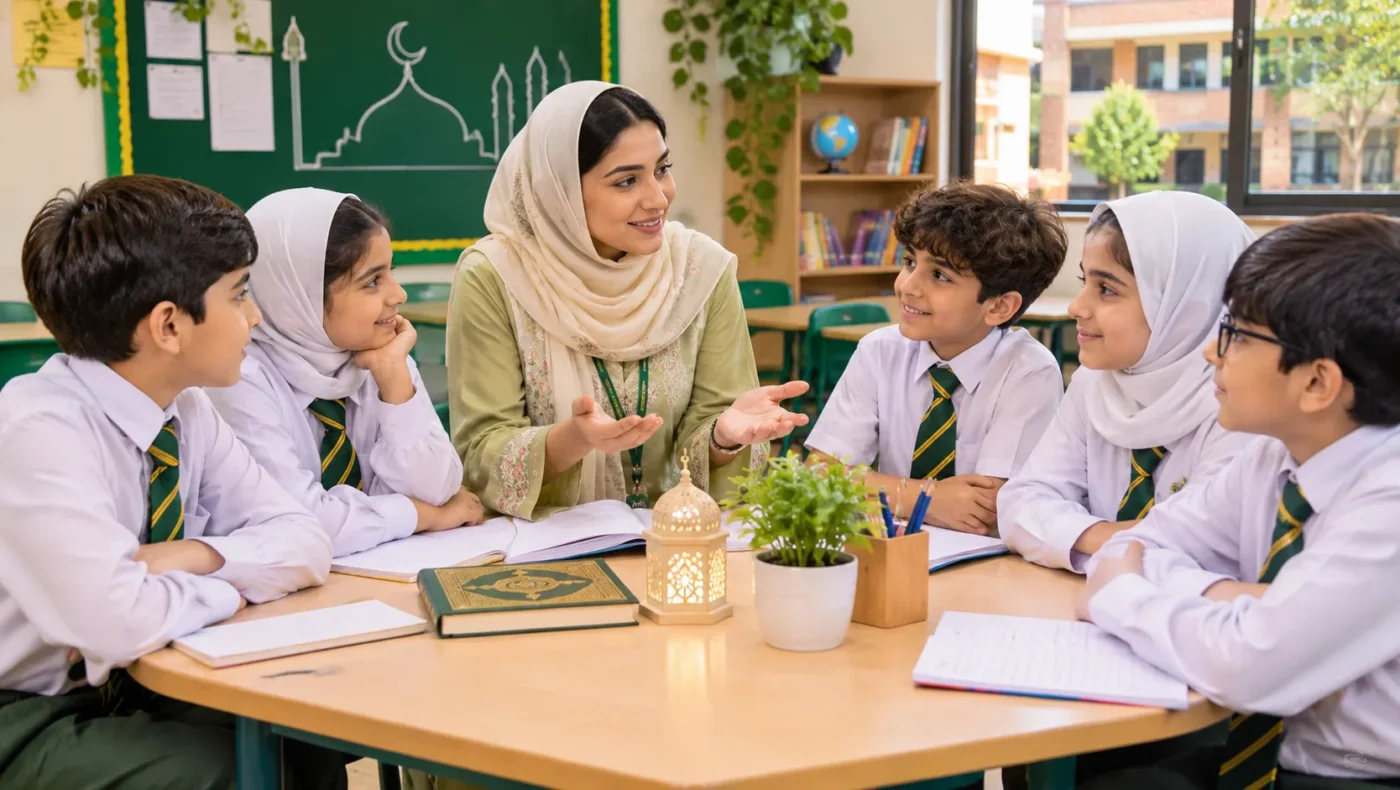
Character building for children in Islam begins at home, long before a child learns to read. Parents in Pakistan often ask how to raise kids who are honest, kind and respectful in a busy world. The good news is that strong character grows from small, repeated daily habits rather than big lectures. This guide shares simple, practical ways of teaching Islamic values to kids, and how a values-based school can reinforce them.
Why Character Comes First
The Prophet Muhammad (peace be upon him) said that he was sent to perfect good character. That tells us how central akhlaq is in Islam. Marks and skills matter, but a child who is truthful, patient and caring will carry those qualities into every part of life.
Children learn mainly by watching. They copy how we speak to relatives, how we treat the rickshaw driver, and how we react when we are upset. Moral education for children therefore starts with the example parents set, not with rules alone.
Start early
The early years shape habits. Even a three or four year old can say Bismillah before eating, say thank you, and share a toy. Early childhood programmes that focus on personal, social and emotional development support this growth by giving children safe spaces to practise kindness and self-control.
Teaching Honesty and Kindness
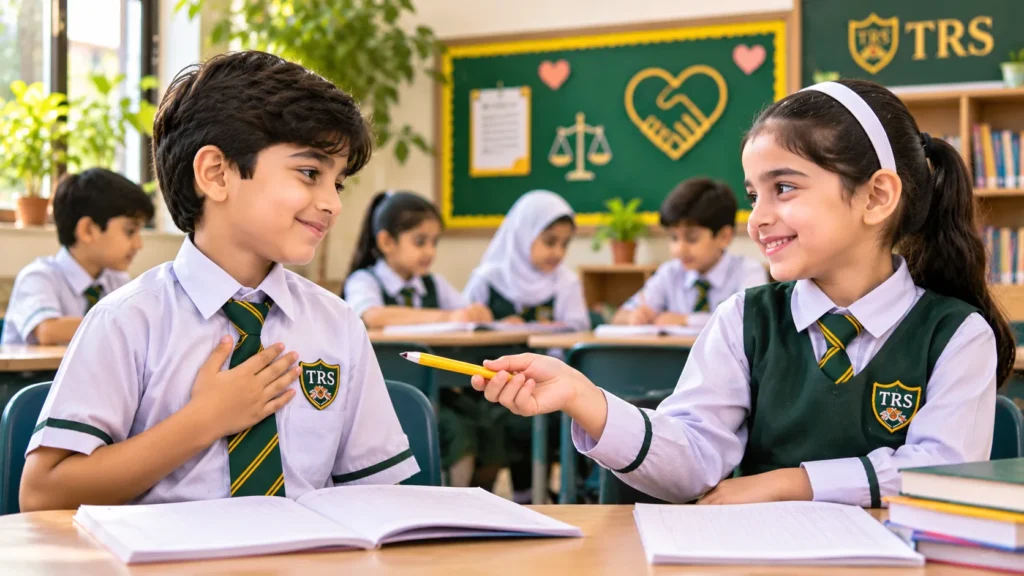
Many parents wonder how to teach kids honesty in Islam. Here are a few ideas that work in real homes.
- Praise truth-telling, even when it is hard. If your child admits to spilling juice, thank them for being honest before addressing the mess.
- Keep your own promises. Avoid saying “tell them I am not home” on the phone. Children notice small untruths.
- Tell stories. Share the story of the Prophet being known as As-Sadiq and Al-Amin (the truthful and the trustworthy) in simple words.
- Make kindness visible. Send food to a neighbour together, help a grandparent, or care for a stray cat with water on a hot day.
Avoid harsh punishment for mistakes. If children fear anger, they learn to hide the truth instead of becoming truthful.
Daily Habits and Manners
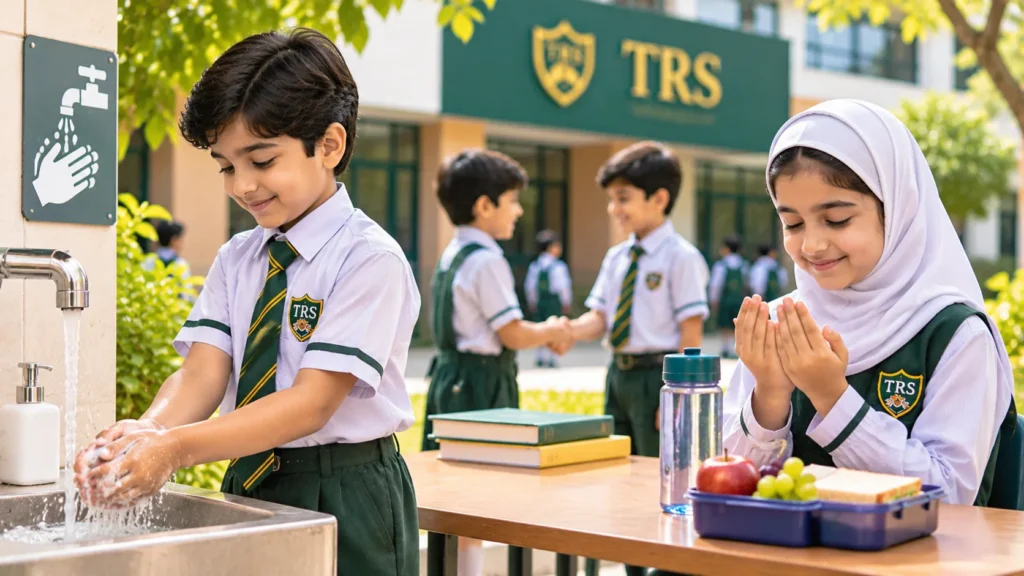
Islamic manners for children are best taught through routine. Link each habit to a daily moment so it becomes natural.
- Morning: say Salam to family members and make a short dua.
- Meals: say Bismillah, eat with the right hand, take small portions and thank Allah afterwards.
- Speaking: use polite words, do not interrupt elders, and avoid teasing or name-calling.
- Cleanliness: keep their space tidy and wash hands before meals and after the bathroom.
- Evening: recite a short surah together and talk about one good deed from the day.
Daily Islamic habits for children work best when they are gentle and consistent. Ten calm minutes every day do more than an hour once a week.
Role of Parents and School Together
Parenting is a partnership. When a school reinforces what you teach at home, children receive the same message in both places. At The Right School, the focus on values, arts and safety, along with child-centered learning and smaller class sizes, gives teachers the chance to know each child personally and encourage good conduct. Programmes such as Hifz and Nazra classes and the PSED programme support Islamic values alongside academics.
You can help the partnership by:
- Talking to teachers regularly about your child’s behaviour and friendships.
- Using the same simple language at home that the school uses for kindness and respect.
- Asking your child every day, “Who did you help today?” instead of only “What marks did you get?”
If you are exploring schooling options in Punjab, Swabi, Karachi, Jhelum or Burewala, look for a school that treats character as seriously as results. You can find more parenting ideas in our Lifestyle articles and more school news in the Blog section.
Simple Activities for Families
Fun activities make values stick. Try these at home:
- Kindness jar: each time your child does a kind act, add a pebble. Celebrate when the jar is full.
- Family sadaqah box: let children choose what to give from their pocket money.
- Story circle: after Maghrib or Isha, share one story of a Prophet or companion and ask what lesson the children found.
- Gratitude talk: at dinner, each person names one blessing from the day.
- Role play: practise how to greet guests, apologise sincerely or say no to a bad suggestion from a friend.
Be patient. Children will forget, repeat mistakes and test limits. Gentle reminders, forgiveness and your own good example matter most.
A Note for Educators and Aspiring School Owners
Character education is also a strong foundation for anyone planning a school. If you are an entrepreneur who wants to build an institution that puts values first, read how to open a school in Pakistan to understand the steps involved.
Final Thoughts
Character building for children in Islam is a daily journey of love, example and patience. Begin with one habit this week, such as saying Salam or thanking Allah after meals, and add more over time. With home and a values-based school working together, your child can grow up honest, kind and confident in their faith.