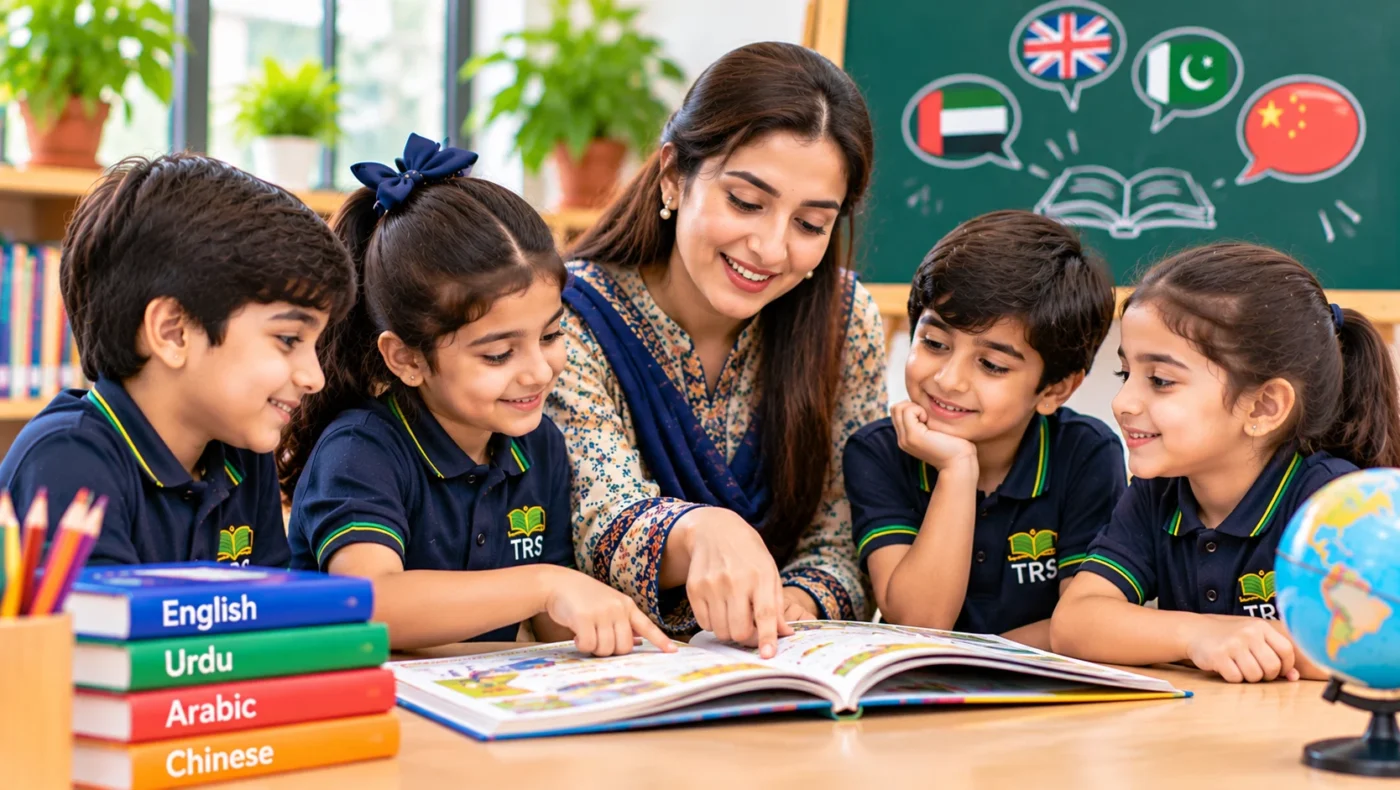
Language Learning Classes for Kids in Pakistan: A Guide
Many parents in Pakistan want their children to speak confident English, read Urdu with ease and recite Arabic correctly. The good news is that children are naturally gifted language learners. This guide explains how language learning classes for kids in Pakistan can help, when to begin, and how to choose the right program for your child.
Why Early Language Learning Matters
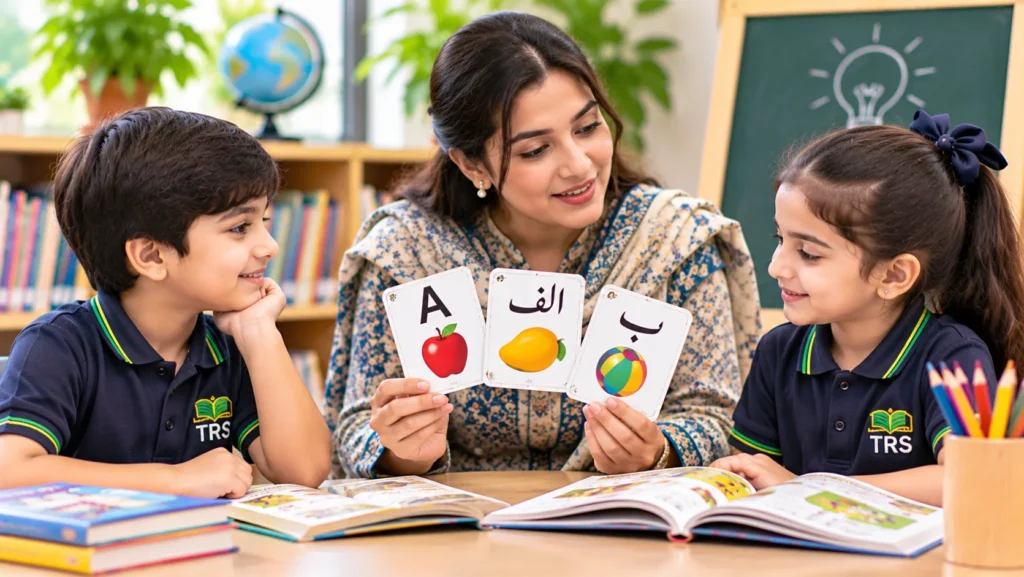
Young children absorb sounds, rhythms and words far more easily than adults do. In the early years they pick up pronunciation naturally, without the self-consciousness that often appears later.
Learning more than one language also supports other skills:
- Communication: children express ideas clearly at school, at home and with relatives.
- Confidence: speaking up in class becomes easier when a child is comfortable with English.
- Cultural and spiritual connection: Urdu and Arabic keep children close to their heritage, literature and faith.
- Focus and memory: practising different languages gives the mind regular, healthy exercise.
For families raising bilingual children in Pakistan, the aim is not to replace one language with another. It is to let each one grow strong.
Best Age to Start
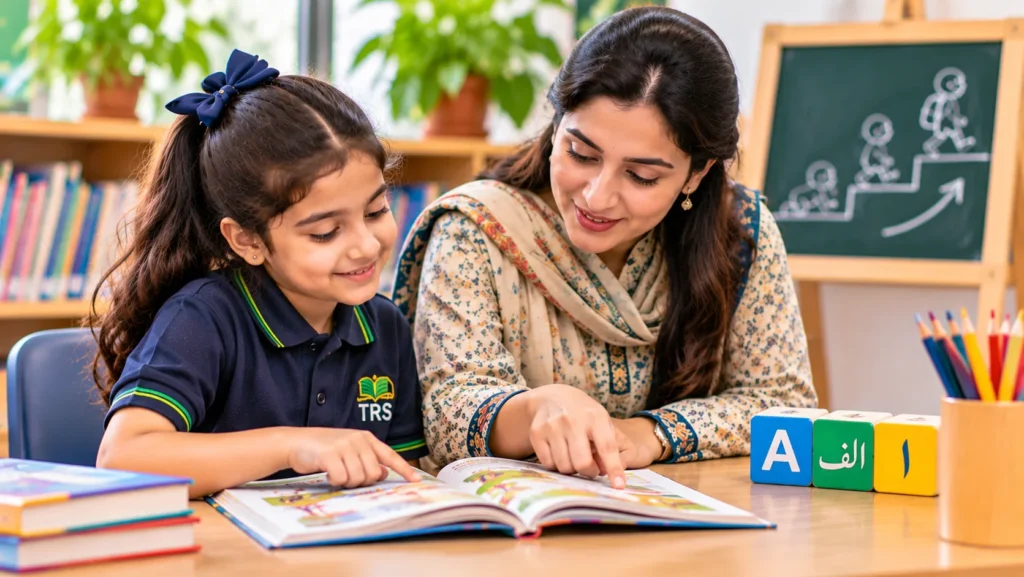
Parents often ask about the best age to learn a second language. There is no single deadline, but the early years are a wonderful window. From ages 3 to 7, children enjoy songs, stories and play, and they pick up new words without pressure.
- Ages 3 to 5: focus on listening, rhymes, simple vocabulary and picture books.
- Ages 6 to 8: add reading and early writing, along with short conversations.
- Ages 9 and above: build grammar, longer writing and confident speaking.
If your child is older, do not worry. Consistent practice and a supportive environment still bring steady progress at any age.
English, Urdu and Arabic Together
Many Pakistani homes already use Urdu, a regional language and English side by side. Adding Arabic for Quran reading can feel like a lot, but children handle it well when each language has a clear place.
Keep Urdu strong
Urdu is the language of everyday expression and culture. Read Urdu stories aloud, tell family tales and encourage your child to write short notes in Urdu. A strong mother tongue makes learning other languages easier.
Build English step by step
If you are wondering how to improve your child’s English at home, start small. Speak simple English during one daily routine, such as dinner. Read a picture book together each evening, name objects around the house, and praise effort rather than correcting every mistake.
Introduce Arabic with purpose
Arabic classes for kids work best when they connect to something meaningful, such as reading the Quran with correct pronunciation. At The Right School, Hifz and Nazra classes sit alongside our academic program, so children can grow in Quranic learning while they learn English and Urdu. This is part of our focus on Islamic values and character development.
Fun Methods That Work
Children learn best when they enjoy themselves. Short, playful sessions beat long, tiring lessons.
- Songs and rhymes: repetition and melody help words stick.
- Storytelling: let children retell a story in their own words.
- Role play: a pretend shop or classroom gives real speaking practice.
- Games and flashcards: quick word games build vocabulary.
- Hands-on activities: projects, art and outings create real reasons to talk. You can see more of this kind of learning in our school activities section.
At home, keep a routine of 10 to 15 minutes a day. Regular, relaxed practice works better than a long weekly session.
What to Look for in Language Classes
When comparing language learning classes for kids in Pakistan, ask a few practical questions:
- Small class size. Personal attention helps shy children speak up.
- Child-centered teaching. Lessons should use play, stories and conversation, not only memorization.
- Qualified, caring teachers. Good teachers are patient, clear and encouraging.
- A clear plan. Look for progress goals suited to your child’s age.
- Balance. The program should support Urdu and Arabic, not push them aside for English.
- Safe, values-based environment. Children learn better when they feel secure and respected.
The Right School offers language learning classes as part of a standardized, child-centered education across our network in Punjab, Karachi, Swabi, Jhelum and Burewala. Our small classes allow teachers to notice each child’s strengths and gently support areas that need work.
Supporting Your Child Beyond the Classroom
Classes work best when home reinforces them. Visit the library, limit passive screen time, and let your child see you reading. Celebrate small wins, such as a new word or a first full sentence. For more parenting ideas and school-life tips, browse our blog.
If you are an educator or entrepreneur who cares about quality language learning, you may also like our guide on how to open a school in Pakistan, which explains how strong programs are built from the ground up.
Final Thoughts
Raising a child who is fluent in English, proud of Urdu and connected to Arabic is very achievable. Start early, keep learning joyful, and choose classes that value both skill and character. To learn how The Right School can support your child’s language journey, visit your nearest TRS campus or get in touch with our admissions team today.