Personal social and emotional development in children is the foundation for how they feel about themselves, get along with others and handle big feelings. At The Right School (TRS), we call this PSED, and we treat it as seriously as reading and numbers. In this guide, we explain what PSED means in simple words and share easy activities you can try at home.
What Is PSED?
If you have ever wondered what PSED is in school, here is the short answer. PSED stands for Personal, Social and Emotional Development. It is a part of early years learning that helps children:
- Understand who they are and what they can do (personal)
- Play, share and cooperate with others (social)
- Name and manage their feelings (emotional)
You may also hear it called social emotional learning for kids. The idea is the same: a child who feels safe, understood and capable is ready to learn.
Why It Matters in Early Years
Emotional development in the early years shapes how a child behaves in class, makes friends and responds to challenges. A three-year-old who cannot yet say “I am upset” may cry, hit or withdraw. A child who has words for feelings and adults who respond calmly learns to cope in healthier ways.
Strong PSED also supports academic learning. Children who can focus, wait their turn and try again after a mistake usually settle into school more easily. This is why it is a key part of any good pre-school. It also fits naturally with the values we teach: kindness, respect, honesty and patience.
Key Areas: Confidence, Empathy, Self-Control
Confidence
Many parents ask how to build confidence in young children. Confidence grows when children get chances to try, struggle a little and succeed. Praise effort, not only results. Saying “You kept trying with that puzzle” is more helpful than “You are so clever.”
Empathy
Empathy means noticing how others feel and caring about it. Children learn it by seeing it. When you speak gently to a relative, help a neighbour or say sorry sincerely, your child is watching and learning.
Self-Control
Self-control is the ability to pause before acting. Young children need lots of practice with waiting, sharing and calming down. It develops slowly, so patience from adults matters more than punishment.
Activities to Try at Home
You do not need special toys. These social skills activities for preschoolers work with everyday routines:
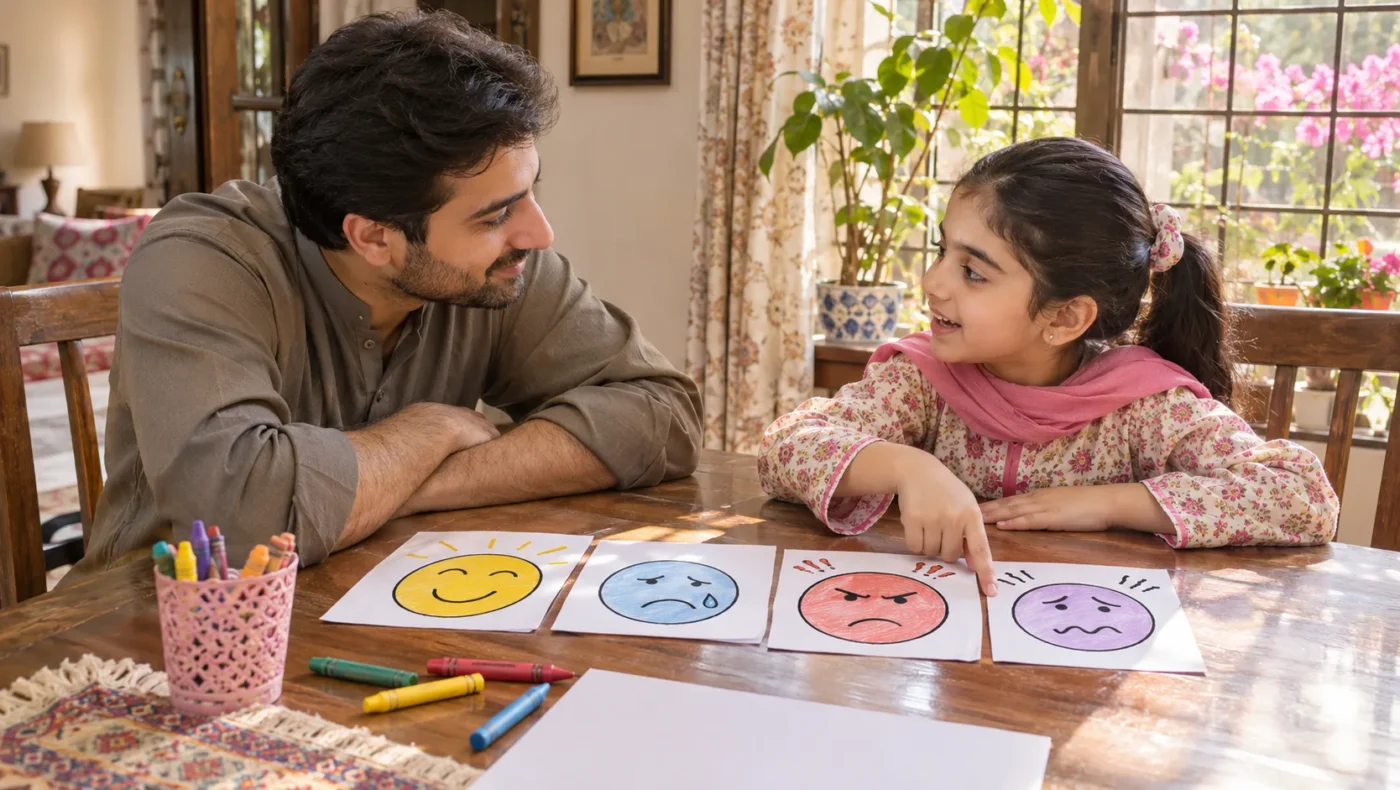
- Feelings faces: Draw happy, sad, angry and scared faces. Ask your child to point to how they feel after school.
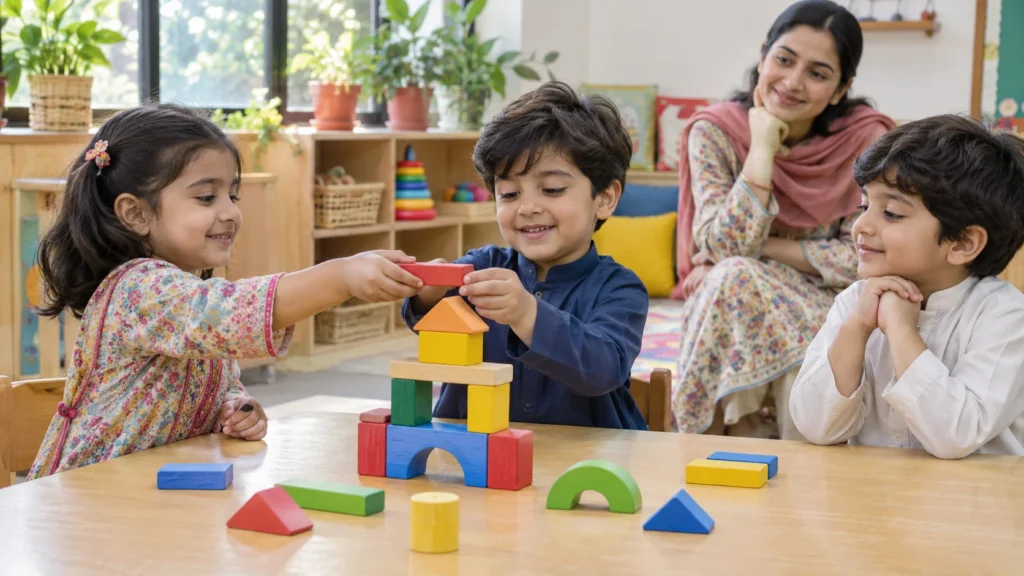
- Turn-taking games: Play simple board games, roll a ball back and forth or build a tower together, taking turns.
- Story talk: While reading, pause and ask, “How do you think she feels? What could he do?”
- Calm-down breathing: Teach your child to breathe in slowly like smelling a flower and out like blowing a candle.
- Small helper jobs: Let your child set out plates, water a plant or put away shoes. Responsibility builds a sense of “I can.”
- Kindness moments: Encourage sharing food with a friend or making a card for a grandparent.
- Family dua and gratitude: At bedtime, share one thing you are thankful for. It builds warmth and reflection.
You can find more ideas for hands-on learning in our activities for children section, and our parenting and lifestyle articles offer everyday tips for families.
Tips for responding to big feelings
- Get down to your child’s eye level and stay calm.
- Name the feeling: “You seem frustrated.”
- Accept the feeling, but guide the behaviour: “It is okay to be angry, but we do not hit.”
- Offer a choice or a next step once they are calm.
How Schools Support PSED
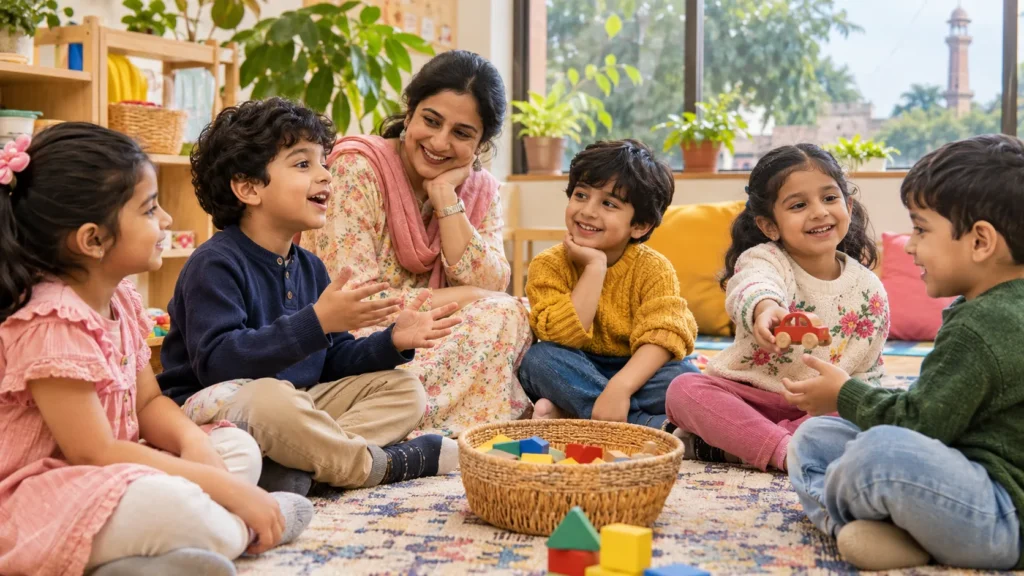
A good school supports PSED every day, not only in a special lesson. At TRS, our PSED program is built into a child-centered approach with smaller class sizes, so teachers can notice each child’s mood, strengths and needs. Circle time, group play, art, stories and educational excursions all give children real chances to cooperate, express themselves and build friendships in a safe environment.
Values-based education adds another layer. When character, respect and care for others are part of daily life, children see emotional skills as part of who they are. Teachers and parents working together makes this even stronger, so share with your child’s teacher what works at home.
Quality early education also depends on the people who build and run schools. If you are an entrepreneur curious about how these programs reach more children, read our guide on how to open a school in Pakistan.
When to Talk to Your Child’s Teacher
Every child develops at their own pace. Still, speak with the teacher if your child often struggles to separate from you, avoids other children, has frequent intense outbursts or seems very anxious. Teachers see children in group settings and can share useful observations and strategies. This is not about labels, it is about giving your child the right support early.
Final Thoughts
Personal social and emotional development in children grows through daily moments: a hug after a hard day, a game of taking turns, a calm conversation about feelings. Small, consistent habits at home combined with a caring school create confident, kind and resilient learners. To see how PSED shapes everyday learning, visit The Right School and talk to our team about pre-school and primary admissions in your city.