If your child is approaching higher secondary years, you may have heard about Advanced Placement courses in Pakistan and wondered whether they are the right fit. This guide explains what AP courses are, which subjects students commonly choose, and how families can prepare for the demands of this college-level study.
What Are Advanced Placement Courses?

Advanced Placement (AP) courses are rigorous, university-level subjects offered to secondary school students. Each course follows a defined curriculum and ends with a standardized exam. Many parents searching for “what are AP courses in Pakistan” want to know one thing: is it just extra homework? It is not. AP is a structured way for motivated students to study a subject in greater depth, with more analysis, writing and independent thinking than a typical school course.
AP exams are taken once a year, usually in May, and students prepare through the school year. Students interested in AP exams in Pakistan should confirm exam registration and test-centre arrangements with their school well in advance, as these details can change.
How AP Fits into Higher Secondary Education
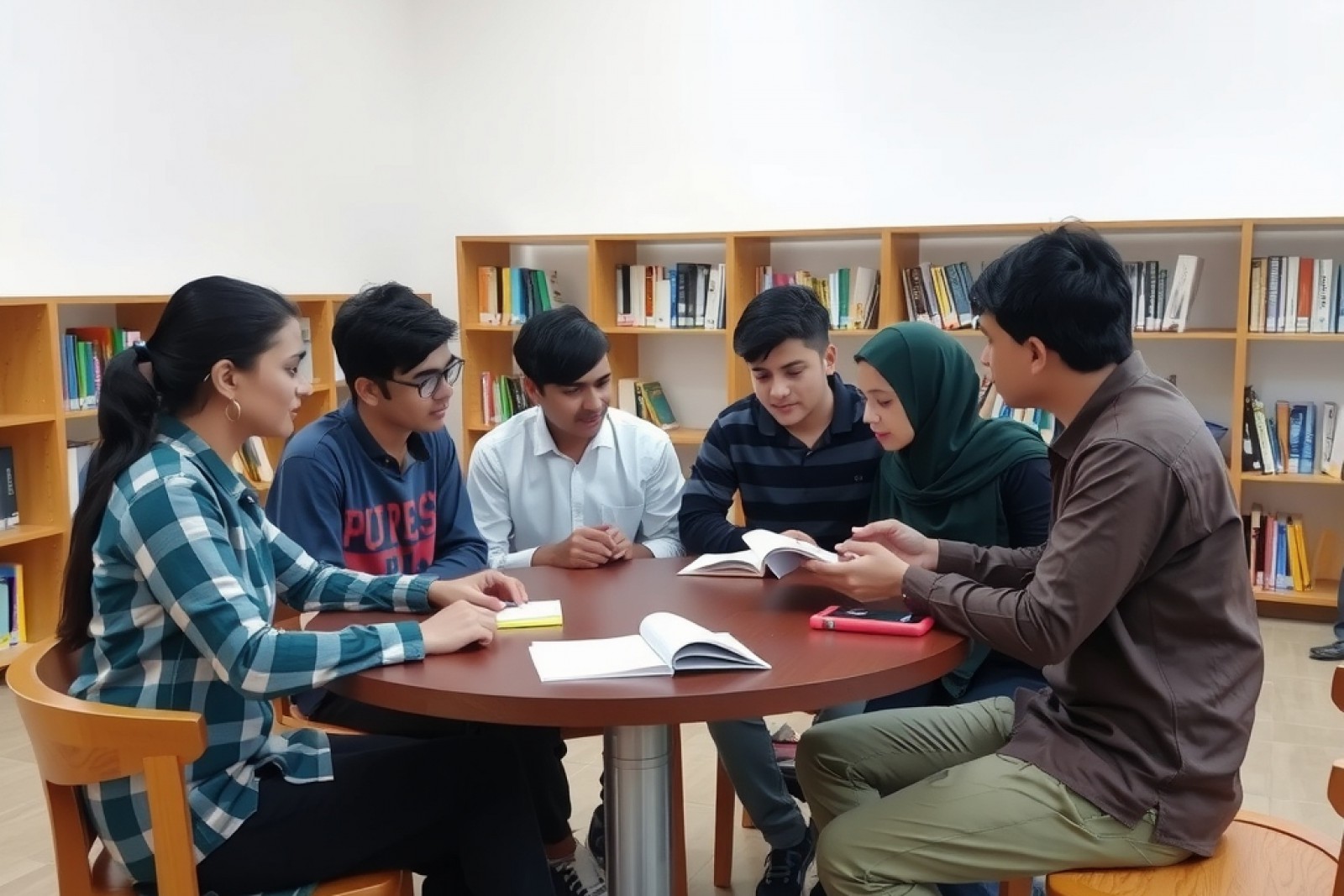
Higher secondary education in Pakistan (grades 11 and 12) is where students start to specialise. AP courses can sit alongside this stage, letting a student deepen strength areas such as mathematics, sciences or English while still building a balanced profile.
Parents often ask about AP vs A levels in Pakistan. Both are respected, subject-based pathways with demanding content. A levels usually involve a smaller number of subjects studied in great depth, while AP allows students to mix and match individual courses, often across a wider range of subjects. The right choice depends on your child’s strengths, school offering and learning style. A conversation with the school’s academic team is the best way to decide.
Popular AP Subjects
If you are looking for an AP subjects list, the offering is broad. Students commonly consider these groups:
- Mathematics and computer science: Calculus, Statistics and Computer Science.
- Sciences: Biology, Chemistry, Physics and Environmental Science.
- English and humanities: English Language, English Literature and world history.
- Social sciences and business: Psychology, Economics and Government subjects.
- Arts: Art and design related courses.
Not every school offers every subject, so always check which AP courses are available before planning.
Skills Students Build Through AP
Beyond grades, AP develops habits that serve students for life:
- Critical thinking: questioning ideas and supporting arguments with evidence.
- Academic writing: structuring clear, well-reasoned responses.
- Time management: balancing a heavier workload across subjects.
- Independent learning: taking ownership of revision and practice.
- Confidence: tackling challenging material and seeing steady progress.
How to Choose AP Courses
Parents often ask, “Which AP subjects should I choose?” Start with these steps:
- Look at interests first. A student who enjoys a subject will cope far better with its difficulty.
- Review current performance. Strong results in the related subject at grade 9 and 10 level are a good sign.
- Think about future study areas. Pick subjects that connect naturally with the field your child is drawn to.
- Start modestly. One or two courses is a sensible beginning, adding more only if your child is comfortable.
- Talk to teachers. They know your child’s strengths and study habits.
As for when students should start AP courses, most begin in the higher secondary years, once they have a solid foundation from earlier grades. A strong base in English, mathematics and science makes the transition smoother.
Preparing for AP Study Load
AP asks more of students than a regular class, so preparation matters. Families can help in practical ways:
- Build routines early. A consistent daily study slot is better than last-minute cramming.
- Protect rest and health. Sleep, meals and some physical activity keep concentration high.
- Encourage questions. Students who ask in class understand more deeply.
- Use past-style practice. Timed practice builds exam confidence.
- Keep emotional balance. Pressure can build, so listen and offer encouragement, not only reminders.
Strong foundations also come from earlier years. Schools that nurture personal, social and emotional development help children arrive at higher secondary with resilience and self-discipline. You can find more parenting and school life ideas in our Blog section, and see how learning goes beyond textbooks in our Activities category.
Studying AP at TRS
The Right School (TRS) offers education from pre-school through higher secondary, with Advanced Placement courses available as part of its higher secondary offering. Our child-centered approach, smaller class sizes and personal attention help students receive the guidance that demanding courses require. Values, arts and safety remain at the heart of school life, so academic ambition grows alongside character.
Curious about how a school network is built around this kind of standardized, supportive education? Read our article on how to open a school in Pakistan to see the thinking behind the TRS model.
If you would like to know which AP subjects are offered at your nearest TRS campus, speak with the school team about available courses, admission and scholarship options. A short conversation can help you decide whether AP is the right next step for your child.