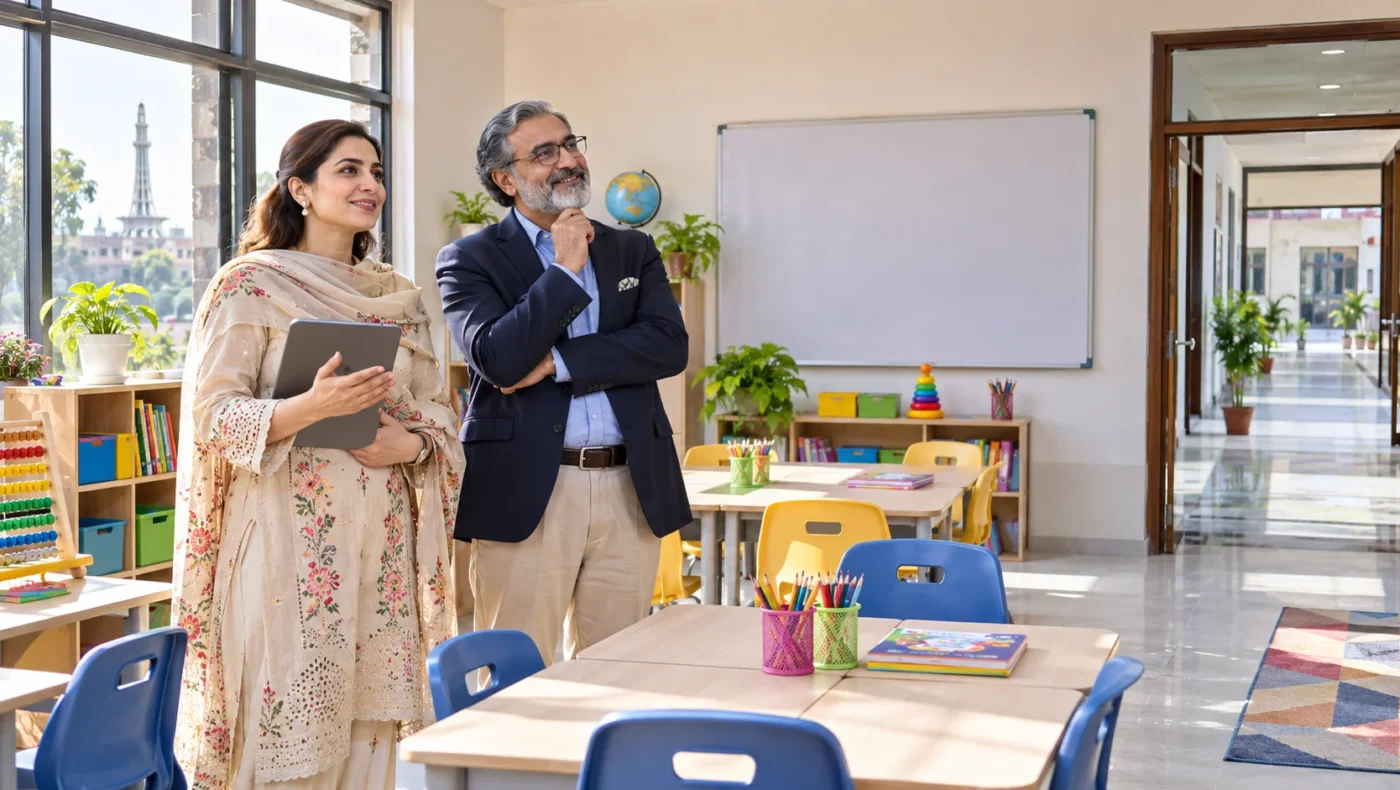
If you are wondering how to start a school business in Pakistan, you are probably asking two questions at once: can it make money, and can it do real good for children? The answer to both is yes, but only when the school is planned as a long-term institution and not as a quick investment. This guide focuses on the business side: how a private school earns, what it costs to run, and which choices shape profit. For registration and setup steps, read our guide on how to open a school in Pakistan.
Is the School Business Profitable in Pakistan?
Many first-time investors ask, “is school business profitable in Pakistan?” Education is a constant need. Parents across Punjab, Khyber Pakhtunkhwa and Sindh consistently prioritize their children’s schooling, and demand for affordable private options remains strong in towns as well as big cities.
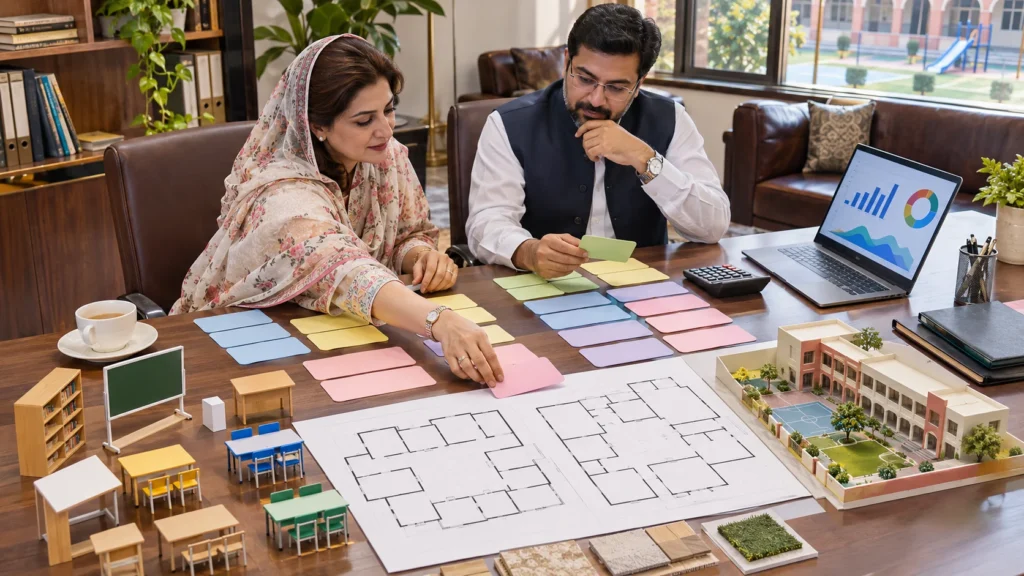
That said, a school is not a fast-return business. Profit depends on enrollment, fee level, cost control and reputation. Most schools take time to reach a healthy number of students, so you should plan for a period where income is lower than expenses. We do not quote fixed profit figures here, because results vary widely by city, fee structure and management quality. Build your own numbers using local fee levels and your actual costs.
How a Private School Earns Revenue
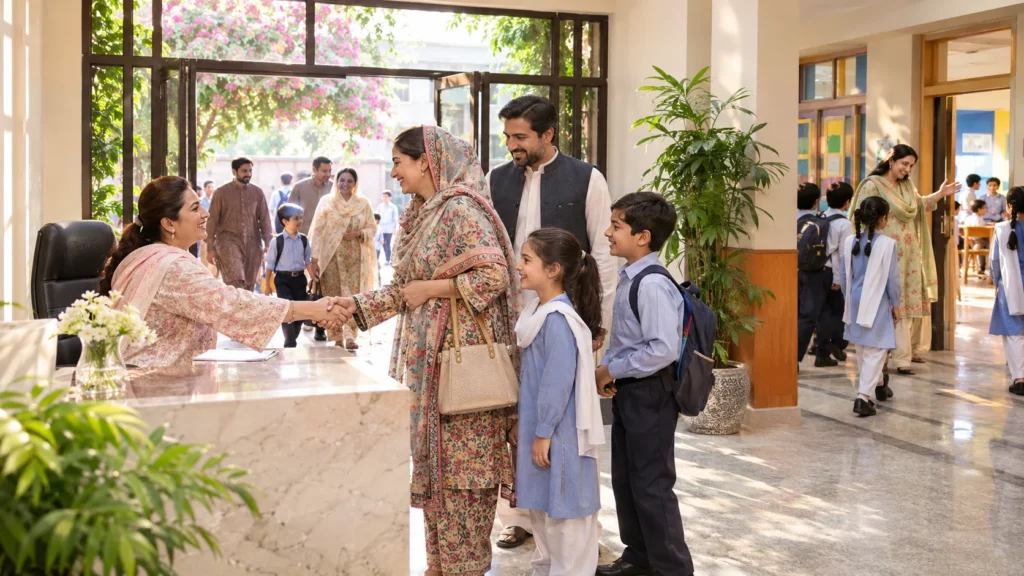
The school business revenue model in Pakistan is built mainly on recurring fees, with a few extra streams on top.
- Monthly tuition fees: the core and most predictable income.
- Admission and registration fees: usually collected once when a child joins.
- Annual charges: for activities, materials or facilities, where parents are clearly informed in advance.
- Add-on programs: coding classes, language learning, Hifz and Nazra classes, and other enrichment that parents value.
- Educational excursions and events: well-planned trips that cover their own costs and add to the school experience.
The strongest schools do not chase every stream. They keep tuition fair, offer a few programs that match what families in their area actually want, and protect trust above all.
Main Costs to Plan For
A realistic school business plan in Pakistan lists every recurring and one-time cost before the doors open. Typical headings include:
- Premises: rent or purchase, plus safe renovation, classrooms, washrooms and play space.
- Teacher and staff salaries: usually the largest monthly expense. Good teachers are the heart of your school.
- Furniture, learning materials and technology.
- Utilities, maintenance and security.
- Marketing and admissions: local awareness matters a great deal.
- Curriculum and training: developed in-house or obtained through a network.
- Working capital: a cash reserve to cover the first months while enrollment grows.
Keep a buffer. Underestimating the early months is one of the most common reasons good schools struggle.
Choosing a City and Location
Location shapes your fee level, student numbers and reputation. Look at the neighborhood before you look at the building:
- How many families with school-age children live within a short, safe commute?
- What fee range do local households realistically afford?
- Which gaps exist? Many areas lack a good pre-school or a values-focused option.
- Is the site safe, accessible and suitable for children?
Smaller cities and towns such as Swabi, Jhelum and Burewala can offer strong opportunities, because families there often have fewer quality choices. Larger cities like Karachi offer more demand but also more competition and higher property costs. Match the school’s model to the community, not the other way around.
Franchise or Independent Model
This is one of the biggest decisions for small school business ideas in Pakistan. An independent school gives full control, but you must build curriculum, teacher training, systems and reputation from scratch.
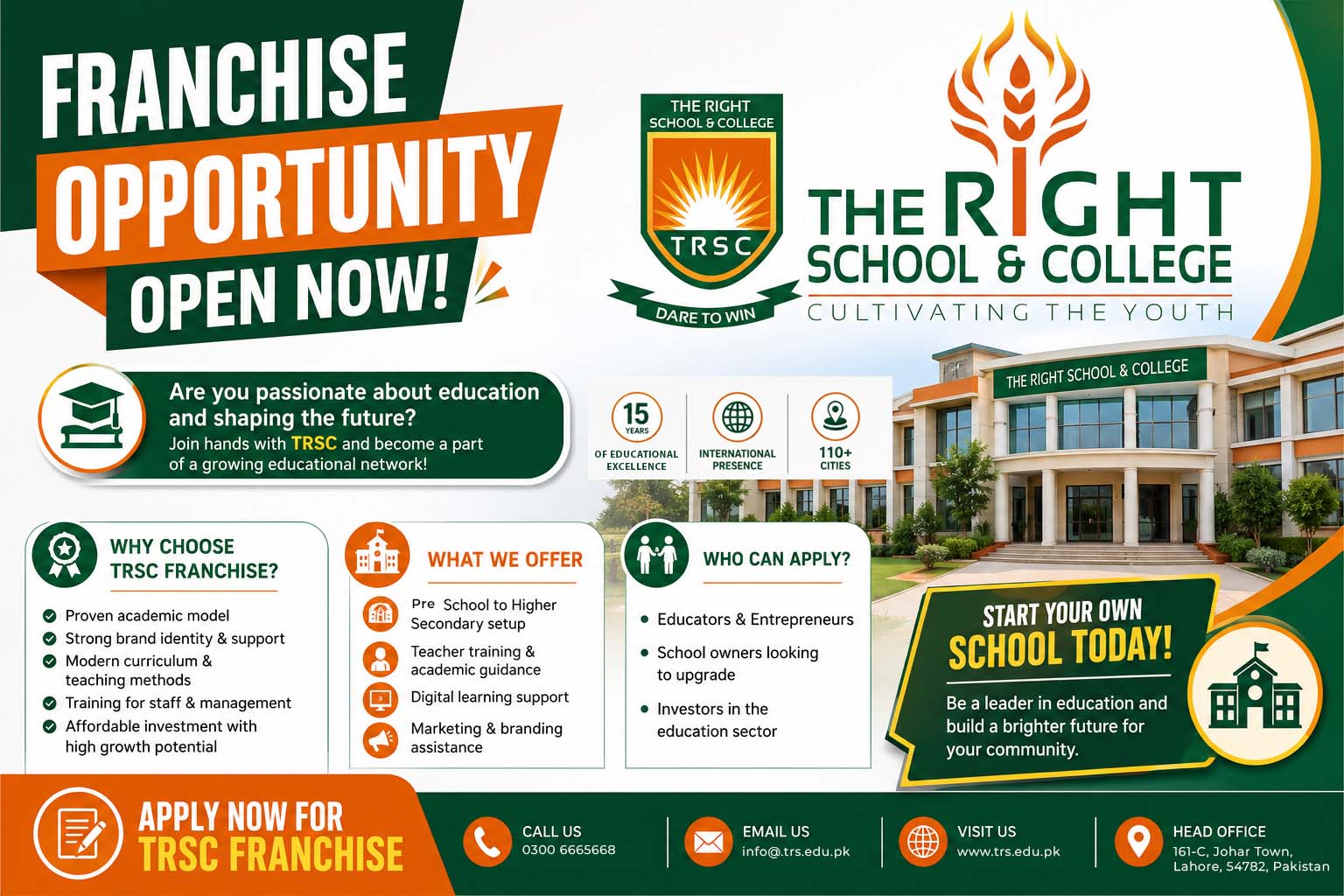
A franchise offers a tested structure. With The Right School, the TRSC Franchise provides standardized education, ongoing head-office support and a child-centered approach with a focus on values, arts and safety. This can shorten the learning curve for first-time owners who are new to education management. You can read more about this route in our article on the benefits of opening a school in Pakistan with TRSC Franchise.
Whichever model you choose, ask the same questions: What support will I receive? What are all the costs? How will quality be maintained as the school grows?
Common Mistakes New School Owners Make
- Treating the school only as an investment. Parents notice quickly when care for children is secondary.
- Setting fees without studying the local market. Too high empties classrooms; too low cannot pay for quality.
- Hiring cheaply. Weak teaching harms reputation, which is your best marketing.
- Ignoring safety and child wellbeing. Safe premises and caring staff are essential.
- Skipping a cash reserve. Early months are rarely profitable.
- Offering too much too early. Do a few things well, then add programs such as coding or language classes.
- Neglecting communication with parents. Regular updates build trust and word-of-mouth admissions.
Building Value Beyond Profit
Schools that last are those parents recommend. Focus on smaller class sizes, personal attention, character development and fair pricing, and consider scholarship options that make your school accessible to more families. A strong reputation brings steady enrollment, and steady enrollment is the foundation of profit.
Next Steps
Start by writing a simple school business plan: your target neighborhood, fee range, expected enrollment, monthly costs and cash reserve. Then decide between an independent school and a franchise. For more articles on education and school life, browse our Blog and Lifestyle sections. If you would like to explore the TRSC Franchise, contact The Right School to discuss what support and standards come with it.