Choosing a pre-school in Pakistan is one of the first big decisions you make as a parent. The early years shape how your child feels about learning, friends and school for a long time. With so many options in every city, it helps to have a clear checklist. This guide walks you through what matters most: age, learning style, class size, safety, values, fees and the questions to ask on a visit.
What a Good Pre-School Offers
A good pre-school is not a place that rushes children into writing and exams. Early childhood education in Pakistan works best when it builds the whole child. Look for a school that offers:
- A warm, calm environment where children feel safe and welcome
- Time for play, stories, art, songs and simple hands-on activities
- Gentle introduction to letters, numbers, Urdu, English and Quran basics
- Teachers who are patient, trained and kind
- Regular, honest communication with parents
If a school promises that your three-year-old will read fluently in a few weeks, be careful. Children grow at their own pace, and pressure at this age often does more harm than good.
Right Age to Start Pre-School
Many parents ask what age to start pre-school in Pakistan. Most schools take children into play group or nursery between about two and a half and four years old, and then move them into prep or kindergarten. The exact age bands differ from school to school, so ask each one how it groups children.
Instead of focusing only on age, look at readiness. Can your child spend a few hours away from you? Do they show interest in other children? Can they communicate basic needs? A short trial visit or a play group admission with shorter hours can make the first weeks easier. If your child is not ready yet, waiting a few months is fine.
Play-Based and Child-Centered Learning
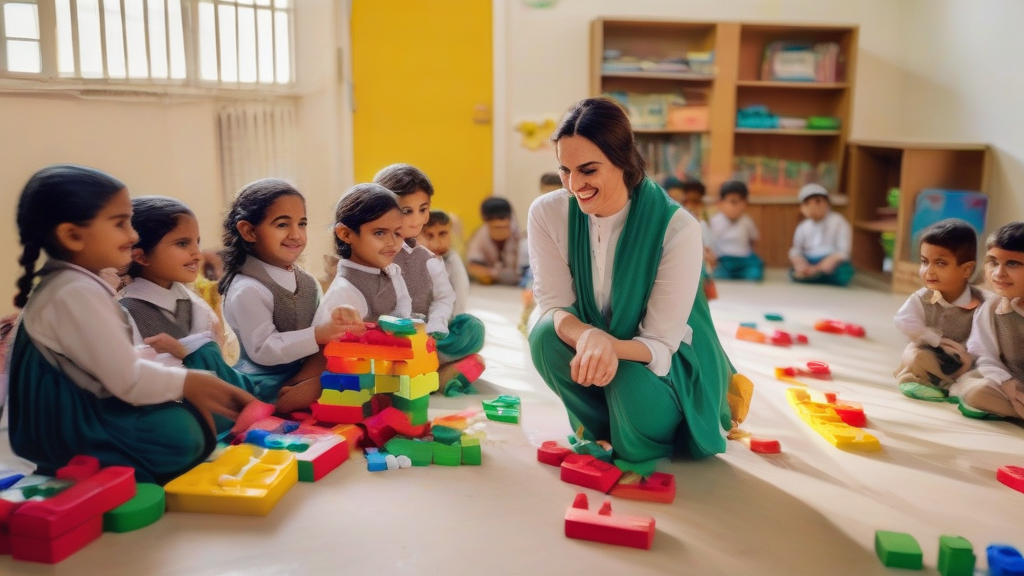
Play-based learning is the most important feature to look for in a pre-school. Through play, children practice language, counting, sharing, patience and problem solving without feeling they are being tested.
Signs of real child-centered learning
- Classrooms have corners for books, blocks, art and pretend play
- Children’s work is displayed, and it does not all look identical
- Teachers ask questions and listen instead of only giving instructions
- The day has a rhythm: circle time, activity, snack, outdoor play, rest
Some schools also add age-appropriate enrichment such as simple language activities, early coding concepts through games, and educational outings. These are a bonus, but they should never replace play and emotional care.
Class Size and Teacher Attention
Young children need adult attention. In a crowded classroom, a shy or sensitive child can easily be overlooked. Smaller class sizes mean the teacher knows each child’s habits, strengths and worries.
When you visit, count the children and the adults in a room. Ask how many children are assigned to each teacher and whether there is a helper or assistant. Ask how teachers handle a child who cries, struggles to share or needs extra support. A confident, specific answer is a good sign.
Safety and Values to Look For
Safety
- Secure gates and a clear pick-up and drop-off system
- Clean washrooms suited to small children
- Safe, supervised play areas with no sharp or broken equipment
- Clear policies on health, illness and emergencies
- Staff who are known to the school and supervised at all times
Values and character
Many families want a pre-school with Islamic values. At this age, that means simple, loving habits: saying salam, saying bismillah before eating, honesty, kindness, respect for elders and sharing. Ask how the school teaches these through daily routines and stories rather than through pressure. If you also want your child to begin Quran learning, ask whether Nazra or Hifz classes are available as they grow.
Emotional growth matters as much as academics. Schools that support personal, social and emotional development help children name their feelings, make friends and handle small disappointments.
Understanding Fees and Value
Fees vary widely across cities such as Karachi, Jhelum, Burewala and Swabi, and across schools. Rather than choosing only by price, ask for a full list of costs: admission fee, monthly tuition, annual charges, uniform, books and any activity or trip fees. Ask whether scholarships or fee support are available. The best value is a school that is affordable for your family and still delivers small classes, caring teachers and a safe setting.
Questions to Ask During a School Visit
Always visit before you enroll, ideally while classes are running. Take this list with you:
- What is your daily routine for the youngest children?
- How much of the day is play and activity?
- What is the maximum number of children per class?
- How do you keep children safe at arrival, during play and at dismissal?
- How do you teach good manners and values?
- How will I receive updates about my child’s progress?
- How do you help children settle in during the first weeks?
- What is the complete fee structure, and are there scholarship options?
- What happens after pre-school, and does the school continue to higher classes?
Pay attention to how children and teachers behave when they are not being watched. Happy, relaxed children are the best evidence of a good school.
Pre-School at The Right School
The Right School (TRS) runs schools from pre-school through higher secondary, so your child can grow in one familiar, values-based environment. Our approach is child-centered, with smaller class sizes, personalized attention and a strong focus on values, arts and safety. Our Personal, Social and Emotional Development (PSED) program supports children in building confidence and kindness from the early years. TRS follows a standardized education model across its network, and we offer affordability and scholarship options for families.
As children grow, they can join activities such as coding classes, language learning, Hifz and Nazra classes and educational excursions. You can browse photos and stories from school life in our school activities section, and find more parenting and school updates in our TRS blog.
Are you an entrepreneur who cares about early education and wants to bring this model to your community? Read our guide on how to open a school in Pakistan to learn what the process involves.
Final Thoughts
The best pre-school in Pakistan is not necessarily the biggest or most expensive. It is the one where your child feels safe, curious and loved, where teachers know them by name, and where your family’s values are respected. Use this checklist, visit more than one school, trust your instincts, and choose the place where your child can enjoy learning. To see our classrooms and meet our teachers, contact your nearest TRS campus and book a visit today.