Every parent in Pakistan wants a school that sees their child as an individual. The child-centered learning approach is built on exactly that idea: lessons, activities and classroom routines are designed around how children actually learn, not just around finishing a textbook. In this guide we explain what it means, how it differs from rote learning, and how you can tell whether a school truly practises it.
What Is Child-Centered Learning?
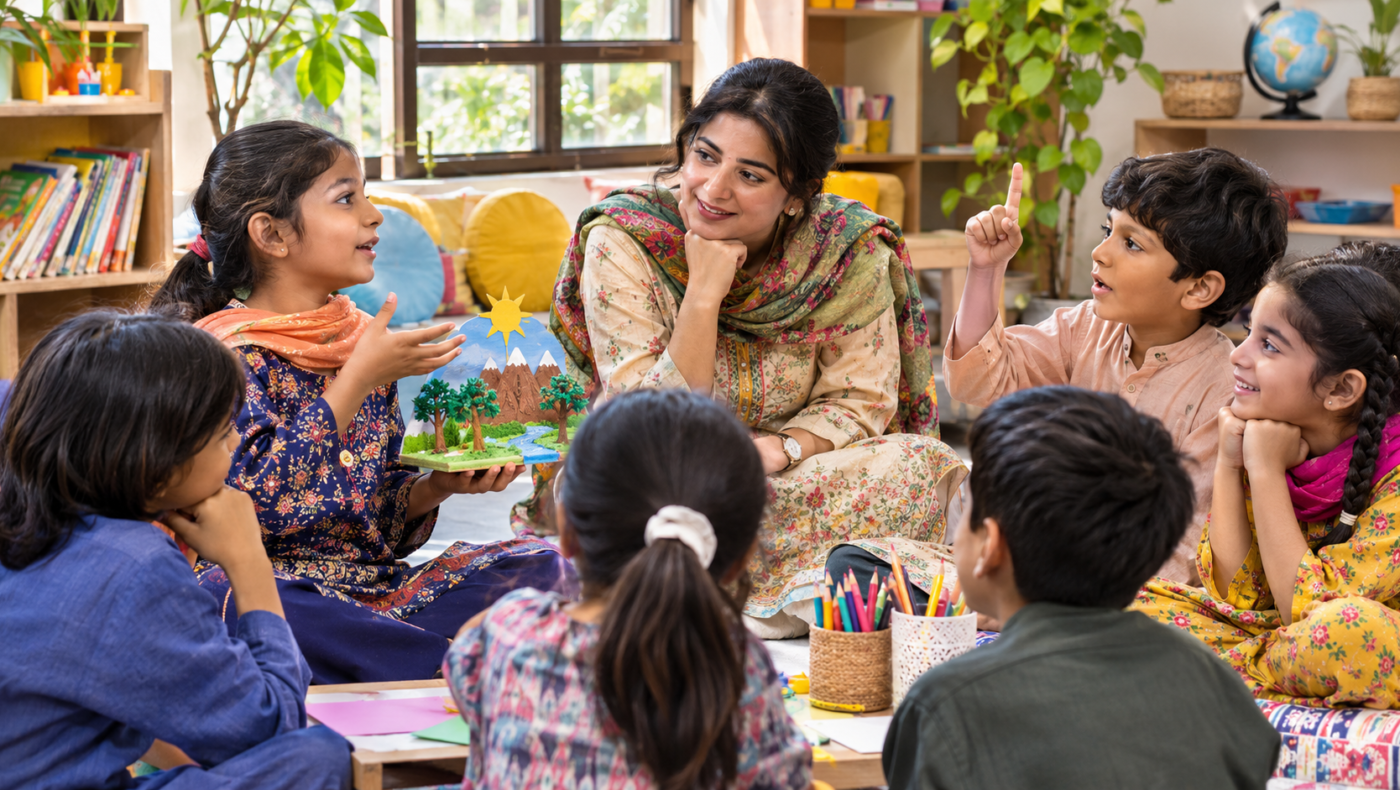
Child-centered learning (also called child centered education or student-centered learning) places the learner at the heart of the classroom. The teacher guides, asks questions and observes, while children explore, discuss, try things out and take part in their own learning.
Key ideas include:
- Every child learns at a different pace and in a different way.
- Curiosity and questions are encouraged, not silenced.
- Learning covers the whole child: academic, social, emotional and moral growth.
- Teachers know each student well enough to offer personalized learning in schools, with support or challenge where needed.
At The Right School (TRS), this approach sits alongside a strong focus on values, arts and safety, so children grow in confidence and character together.
Child-Centered vs Rote Learning
Many of us grew up memorising answers and repeating them in exams. Rote learning has a place, for example in memorising multiplication tables or learning Quran verses in Hifz and Nazra classes. The problem begins when memorisation is the only method used.
Where rote learning falls short
- Children may remember facts for the test but forget them soon after.
- Asking “why” is often discouraged.
- Quieter or slower learners can feel left behind.
- Understanding and problem-solving skills grow slowly.
What child-centered learning adds
- Children connect new ideas to things they already know.
- Practical work, discussion and projects make lessons meaningful.
- Mistakes are treated as part of learning, which builds resilience.
- Memorisation is still used, but with understanding behind it.
So the debate of child centered vs rote learning in Pakistan is not about throwing away discipline. It is about balancing memory with understanding, so children can apply what they learn.
What It Looks Like in a Classroom
Here are a few everyday examples you might see in a child-centered classroom:
- Maths: Young children count with beads, blocks or even fruit before moving to written sums.
- Language: Students tell stories, read aloud in small groups and discuss characters, not just copy answers from the board.
- Science: Children plant seeds, observe changes and record what they notice.
- Coding and languages: Short, hands-on sessions let children experiment, such as in coding classes for kids or language learning classes.
- Social and emotional growth: Circle time and discussion help children express feelings and respect others, similar to a Personal, Social and Emotional Development (PSED) program.
Educational excursions are another good example. A trip outside the classroom lets children see lessons come alive. You can read more about school outings and similar experiences in our school activities section.
Benefits of Smaller Class Sizes
Class size matters because personal attention is hard to give when one teacher manages a crowded room. Smaller classes make child-centered teaching realistic.
- Better attention: Teachers notice when a child is struggling or ready for more challenge.
- More participation: Shy children get a chance to speak.
- Stronger relationships: Children feel known and safe, which helps them learn.
- Easier feedback: Teachers can give timely, specific guidance, and keep parents informed.
This is one reason TRS keeps smaller class sizes with personalized attention as part of its model across its schools in Punjab, Swabi, Karachi, Jhelum and Burewala.
Signs Your Child’s School Does This
When you visit a school, look beyond the building and brochure. Here is a simple checklist:
- Ask about class size. How many children does one teacher handle?
- Look at the walls. Is there children’s own work displayed, not only printed charts?
- Watch a lesson. Are children talking, doing and asking, or only copying and listening?
- Ask how progress is measured. Good schools look at understanding, effort and growth, not just exam marks.
- Check for emotional support. Is there a clear approach to behaviour, kindness and wellbeing?
- Notice how teachers speak to children. Respectful, encouraging language is a good sign.
- Ask about values. A school should nurture character, faith and manners alongside academics.
If your child comes home curious, talking about what they made or discovered, that is often the best sign of all.
For Entrepreneurs: Why This Approach Matters
If you are thinking about starting a school, a clear teaching philosophy is a strong foundation. Our guide on how to open a school in Pakistan explains the practical steps, and the TRSC Franchise offers standardized education with ongoing head-office support so the approach is delivered consistently.
Final Thoughts
A child-centered learning approach helps children become confident, curious and kind. It balances memorisation with understanding, uses smaller classes to give personal attention, and respects each child’s pace. Use the checklist above on your next school visit, and explore more parenting and school-life ideas in our TRS blog. To see child-centered learning in action, visit a TRS school near you and watch a class at work.