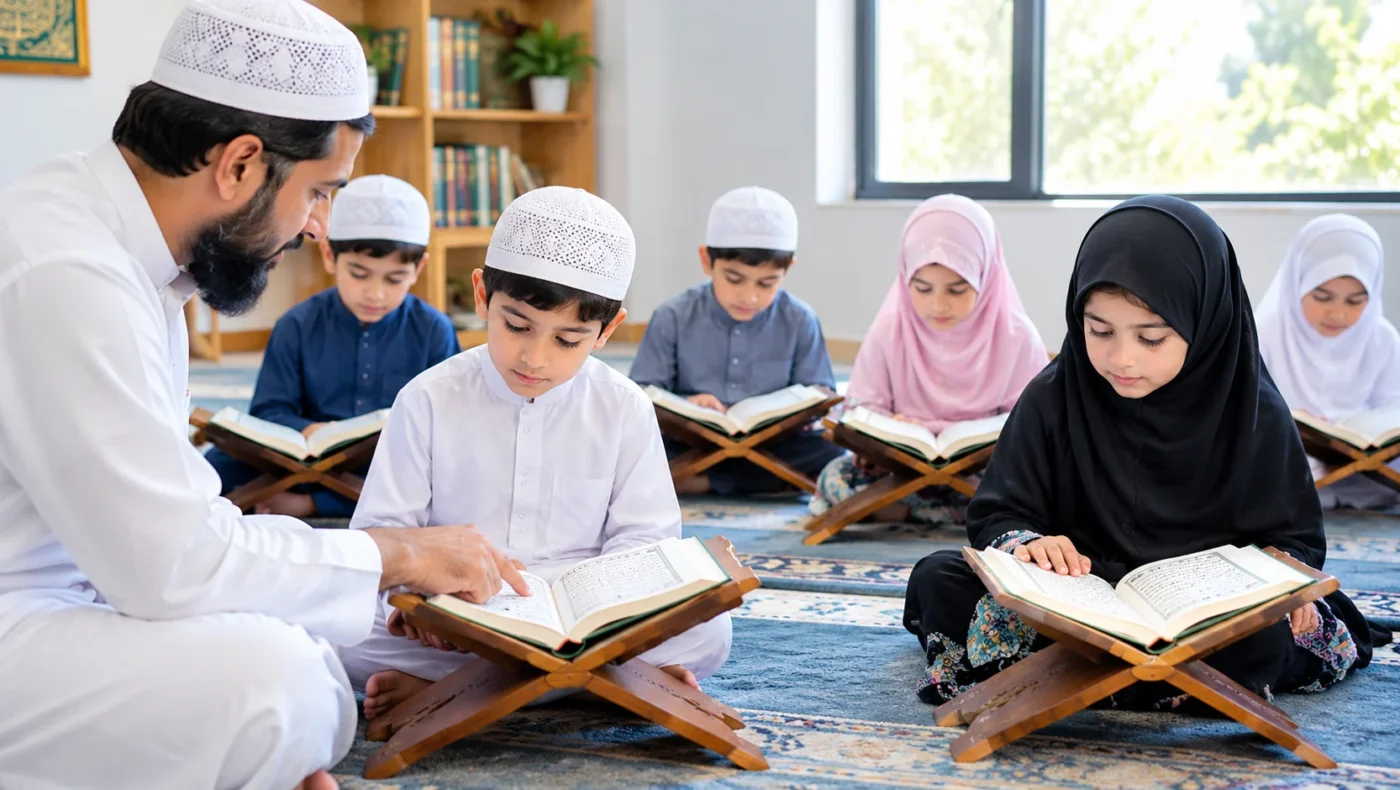
Many parents in Pakistan want their children to grow up connected to the Quran, but the first question is usually practical: should we choose Hifz and Nazra classes for kids, and which one fits our child? This guide explains what each program involves, how they differ, when to begin, and how to keep school studies on track.
What Are Nazra and Hifz?
Nazra means reading the Quran by looking at the text. A child learns the Arabic letters, the rules of pronunciation and how to recite fluently from the mushaf. The goal is correct, confident recitation. Nazra Quran for children is the foundation for everything else.
Hifz means memorising the Quran by heart, in part or in full. A child in a Hifz program recites daily, revises old lessons and slowly builds a lasting memory of the text. It needs steady routine, patience and strong family support.
Difference Between Hifz and Nazra
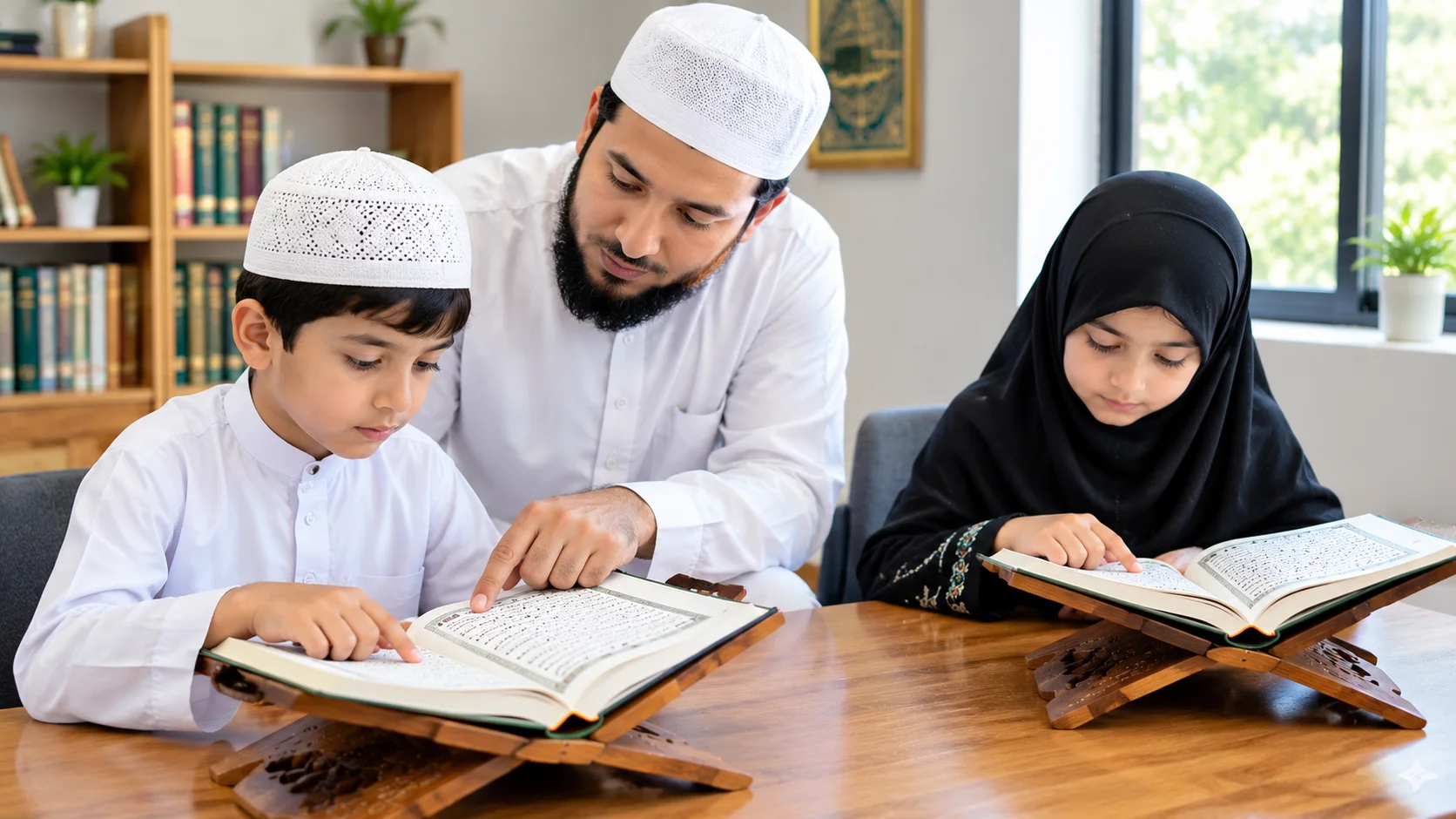
The difference between Hifz and Nazra comes down to goal, time and commitment.
- Goal: Nazra builds correct reading. Hifz builds memorisation.
- Time: Nazra is usually completed in a shorter period, depending on the child. Hifz takes several years and needs daily revision.
- Commitment: Nazra fits easily into a normal school day. Hifz asks for more focused daily time, both in class and at home.
- Order: Most children learn Nazra first. A child who reads fluently is better prepared to memorise.
For most families, Nazra is the natural first step. Hifz can follow when the child reads well, shows interest and the family can support the routine.
Best Age to Begin
There is no single perfect age, and every child is different. Many parents introduce the Arabic alphabet and short surahs at around four or five, once a child can sit, listen and repeat for a short period. Formal Nazra often begins in the early primary years, when reading skills are developing in other languages too.
For the question of the best age to start Hifz, look for readiness rather than a number:
- The child reads the Quran fluently with correct pronunciation.
- They can focus for a short daily session without distress.
- They show genuine interest, not only parental pressure.
- The family can commit to daily revision at home.
Younger children often memorise quickly, but they also need play, rest and gentle encouragement. Pushing too early can create stress and reduce love for the Quran, which defeats the purpose.
Balancing Quran Learning and Academics
Parents often ask: can a child do Hifz and school together? Yes, many children do, provided the schedule is realistic and the school supports it. Quran classes with school work best when they are part of the daily timetable rather than an exhausting extra after long hours.
Practical ways to balance both
- Keep a fixed routine. A set time for new lessons and a set time for revision helps memory.
- Protect sleep and play. Tired children neither memorise nor study well.
- Talk to teachers. Class teachers and Quran teachers should know the child’s workload and coordinate on exams and homework.
- Start small. Begin with short portions and increase gradually as the child gains confidence.
- Celebrate effort. Praise consistency, not only speed.
A school with an Islamic values school approach in Pakistan can make this easier, because character development, daily discipline and Quran learning are treated as parts of one education rather than competing demands.
Tips for Parents at Home
Classes work best when home reinforces them. A few habits make a big difference:
- Listen daily. Even ten minutes of listening to your child recite shows that you value the effort.
- Create a quiet corner. A clean, calm space for recitation builds respect and focus.
- Recite yourself. Children copy what they see. When parents read Quran, children follow.
- Revise often. Short, regular revision beats long, occasional sessions.
- Stay patient. Some days will be slow. Gentle encouragement keeps the love of learning alive.
You can find more parenting and learning ideas in the TRS Blog, and everyday family and routine tips in our Lifestyle section.
Hifz and Nazra Classes at The Right School
At The Right School (TRS), Hifz and Nazra classes sit alongside a child-centered, values-based curriculum. Smaller class sizes mean teachers can give personal attention, listen to each child recite and adjust the pace to suit them. Our approach also includes personal, social and emotional development, so children grow in character as well as knowledge.
Because TRS runs schools from pre-school through higher secondary, families can begin with early Quran habits and continue through the years without changing environments. Our network serves families across Pakistan, including Punjab, Swabi, Karachi, Jhelum and Burewala.
Entrepreneurs who care about this kind of education may also be interested in how such a school is built. Our guide on how to open a school in Pakistan explains the steps involved.
Choosing the Right Path for Your Child
If your child is young or new to the Quran, start with Nazra and build a strong base. If your child reads fluently, shows interest and has family support, a Hifz program may be a good next step. Either way, the best program is one that keeps your child happy, safe and growing in both faith and learning.
To see how Hifz and Nazra classes fit into a full school day, contact The Right School and ask about a campus near you.