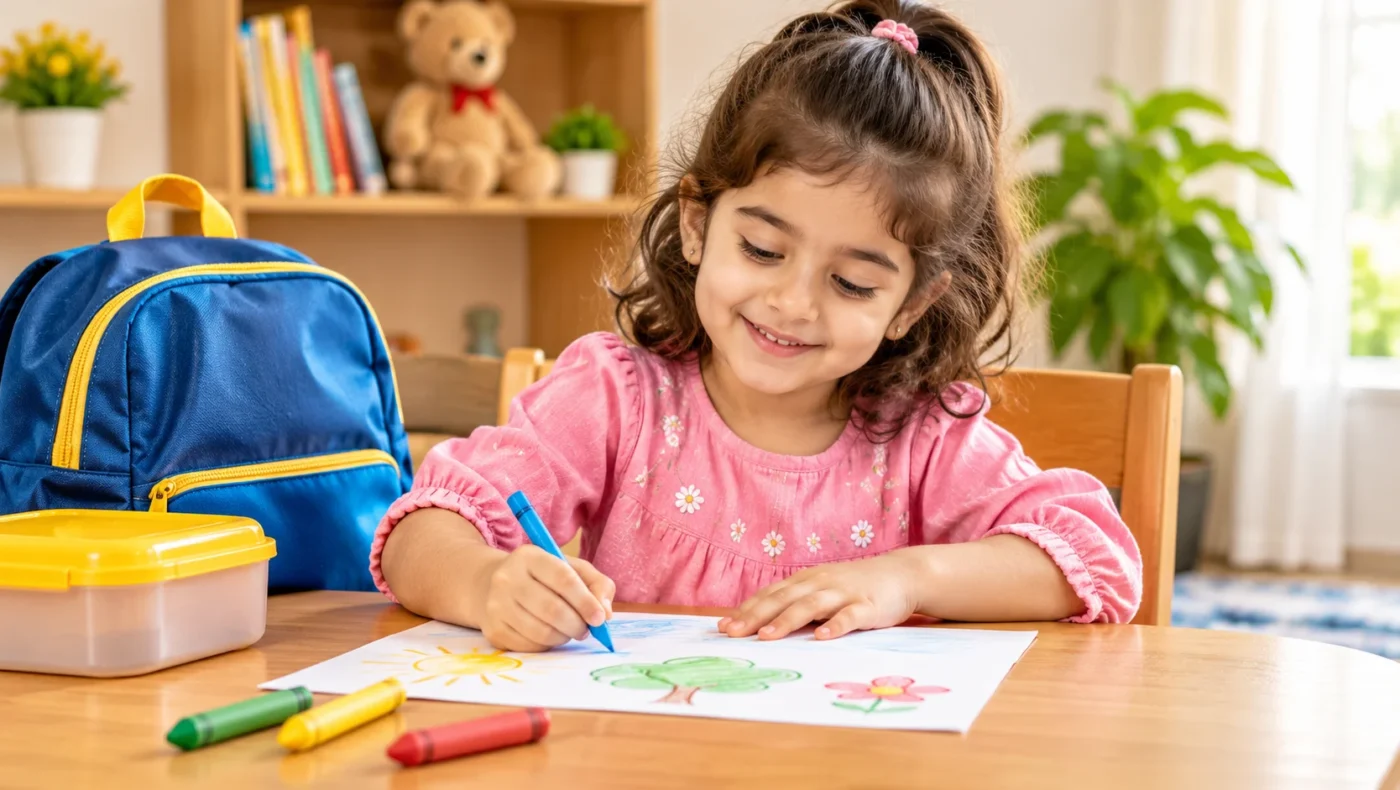
Every parent asks the same question at some point: is my child ready for school? This school readiness checklist for kindergarten in Pakistan will help you answer it calmly. It covers social, emotional, language and self-care skills, along with simple activities you can do at home using everyday items.
One important note first: no checklist is a test. Children grow at different speeds, and a few missing skills do not mean your child cannot start school. Think of this list as a guide to what to practice together, not a pass or fail score.
What School Readiness Really Means
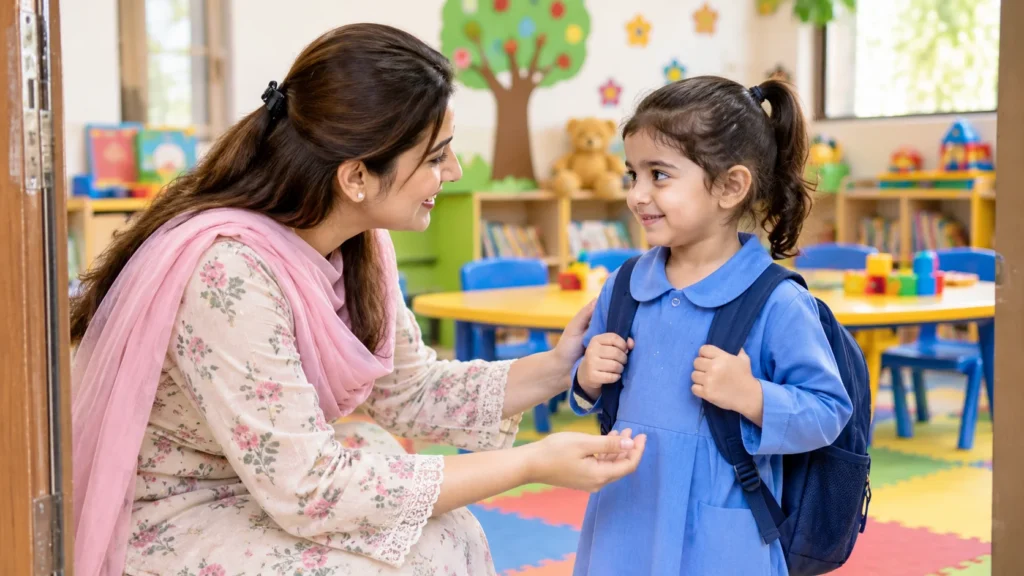
School readiness is not about reading full sentences or writing neat pages at age four. It means a child has enough comfort, curiosity and basic independence to enjoy a classroom and learn alongside others. Kindergarten readiness is a mix of feeling safe away from parents, being able to communicate needs, and showing interest in learning.
In Pakistan, many families start children in pre-school around age three to four and in kindergarten or prep around four to five, though schools set their own age requirements. If you are unsure about the right age to start school in Pakistan, ask the school you are considering what its entry guidelines are. A good school will look at the whole child, not only a birth date.
Social and Emotional Signs of Readiness
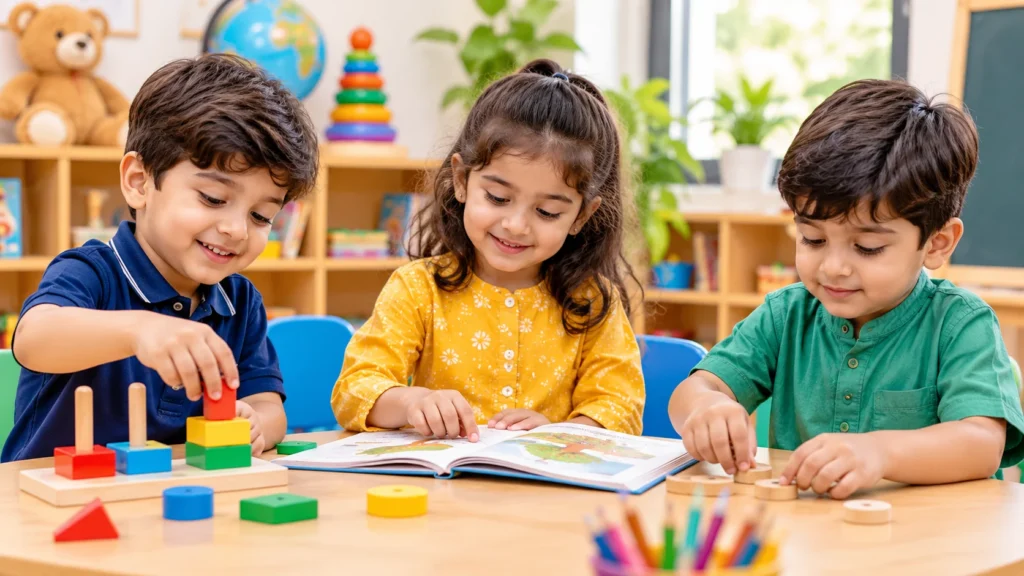
Social and emotional skills for school readiness matter as much as academics. Children who can manage feelings and get along with others settle into class faster. Look for these signs:
- Your child can separate from you for a short time without extreme distress.
- They can play near or with other children, even if sharing is still hard.
- They can wait for a turn with some gentle reminders.
- They can name basic feelings such as happy, sad, angry or scared.
- They respond to simple instructions from adults other than parents.
- They show some interest in trying new things.
At The Right School, this area is supported through our Personal, Social and Emotional Development (PSED) program, which helps children understand feelings, build friendships and develop good character from the early years. Parents who want to understand more about this approach can ask us about the PSED program at any of our campuses.
Language and Early Learning Skills
Children in Pakistan often grow up hearing Urdu, Punjabi, Pashto, English or a mix at home. That is a strength, not a problem. What matters is that your child can express themselves in the language they know best. Check for these skills:
- Speaks in short sentences and can say what they want or need.
- Listens to a short story and can answer a simple question about it.
- Recognizes some familiar words, sounds or their own name.
- Can sing or repeat simple rhymes, duas or short surahs they have heard.
- Holds a crayon or pencil and scribbles or draws shapes.
- Can count a few objects and recognize basic colors and shapes.
If your child is at the stage of asking endless questions, that curiosity is an excellent sign. Do not worry if they cannot yet write letters.
Self-Care and Independence
Teachers appreciate children who can handle small personal tasks, because it lets them focus on learning. Ask yourself whether your child can:
- Use the washroom independently or tell an adult when they need to go.
- Wash and dry their hands.
- Eat from a lunch box and drink water without much help.
- Put on and take off a jacket or shoes (Velcro makes this easier).
- Carry their own small bag.
- Say their name and, if possible, a parent’s name.
Occasional accidents are normal in the early years. A caring school will handle them gently.
Simple Activities to Practice at Home
You do not need special materials. These everyday activities build the skills above:
- Read together daily. Ten minutes of picture-book time builds listening and vocabulary. Ask, “What do you think happens next?”
- Play turn-taking games. Ludo, simple card matching or rolling a ball back and forth teaches patience.
- Draw, tear and paste. Paper, crayons, safe scissors and glue strengthen the small hand muscles needed for writing.
- Give small jobs. Let your child put their plate in the kitchen or pack their own toys away.
- Talk about feelings. When your child is upset, help them name the emotion and find a calm response.
- Arrange playdates. A cousin or neighbor’s child is a perfect way to practice sharing and cooperation.
For more ideas on fun learning outside the classroom, browse our activities for children section, and see our parenting and lifestyle articles for more everyday guidance.
Preparing for the First Day
Knowing how to prepare your child for the first day of school can make that morning far smoother for everyone.
- Visit the school beforehand. Walk around the campus, meet the teacher and let your child see the classroom.
- Start the routine early. A week or two before, move bedtime and wake-up time to match school hours.
- Talk positively. Describe what the day will look like: arriving, playing, snack time, stories, going home.
- Practice the lunch box. Let your child open it and eat from it at home first.
- Keep goodbyes short and warm. A calm hug, a promise to return, and a confident smile work better than a long farewell.
Tears on the first few days are very common and usually pass. Consistency helps children trust that you will always come back.
When to Talk to Teachers
Speak with your child’s teacher if you notice that your child is still very distressed after several weeks, has difficulty understanding simple instructions, avoids other children completely, or seems to struggle with speech. Early conversations help teachers support your child in class, and in smaller classes they can give more personal attention. You know your child best, so share what calms them, what frightens them and what they love.
A school that values partnership with parents will welcome these conversations. At TRS we focus on child-centered learning, values and safety, so every child can grow at a healthy pace.
Final Thoughts
This school readiness checklist for kindergarten in Pakistan is meant to give you confidence, not pressure. If your child is mostly comfortable with the social, language and self-care skills above, they are likely ready to begin. If some areas need practice, a few weeks of playful activity at home can make a real difference.
Curious about how schools are built around early childhood needs? Read our guide on how to open a school in Pakistan to see what goes into creating a safe, well-structured learning environment. And if you would like to visit one of our campuses, contact The Right School to discuss pre-school and kindergarten admission.